

I turned 58 over the weekend and, to celebrate, my wife whisked me off to beautiful Victoria, British Columbia, Canada. There we enjoyed terrific meals, relaxing gardens and a soft-water hotel pool and hot tub. I had an absolute ball. But late one evening as we relaxed in the hotel pool, I found myself crying. Y’see, behind the scenes, in moments we don’t usually talk about on social media, I’ve been wrestling with an intense late-midlife crisis. This weekend was instrumental in helping me resolve that and carry on forward.
I’m going to tell you what I realized, not because the circumstances that caused my crisis are universal but because I think their outcome might be. So along the way it’ll seem I’m bragging, but I’m not. I swear I’m not, and if you follow me through to the end, you’ll see why I feel confident saying that.
I was a child prodigy. Some people are prodigious athletes. Others excel at interpersonal charm and charisma. Still others are physically graceful and symmetrical. My gift was verbal. I could write English sentences before I started kindergarten. I have a knack for foreign languages, my current struggles with Mandarin notwithstanding. I wrote a full book, which I illustrated, in middle school. My IQ appeared to be in the 98th percentile or higher, which is nothing to sneeze at. And see, this is the part where it sounds like I’m bragging, but I didn’t decide to have any of those traits. They just came with the vehicle I inherited.
When you’re a prodigy, people are eager to make you aware of it. One of my first clues was when I came back from a long bout with bronchial asthma to find my school and parents had skipped me a grade. I don’t think schools even do that anymore. I haven’t heard about it happening to anyone in decades. I worked at a middle school for two years and never met a student who’d been skipped. I don’t know if my authority figures made the right choice; there are pros and cons in either direction. I just know people felt I was packing extra wits and had plenty to say about that.
Let’s say you were identified as a musical prodigy at an early age. Teachers heard you play violin, for example, and sent you to play for higher experts. Those experts listened eagerly and said you’d go far. You could be the next Itzhak Perlman, they told you. Your playing has the tonality and expressivity of a young Fritz Kreisler. Now, you don’t know who those people are, being, as you are, 6 years old, so you run to the library and rent some LPs. (Remember, you’re Gen X and it’s 1974.) And lo and behold, those Kreisler and Perlman fellas have a lot on the ball. They’re really good. If you could be as talented as those guys, that’s something you do need to know, right?
At 58, I’m no longer sure. Because while I understand my parents and teachers and grandparents and ministers and principals and family friends were all trying to help me see my abilities as the potential for greatness, I took it in as an expectation of greatness. That became my minimum standard. If you’re a violinist who can reach the same level as Itzhak Perlman, it stands to reason you must reach the same level as Itzhak Perlman. Unfortunately, that isn’t altogether up to you. In fact it might not even be mostly up to you.
As Malcolm Gladwell has pointed out, it takes a lot more than talent to generate “one of the greats.” Yes, Bill Gates had a talent for programming, but it’s also true his mother got him access to a GE mainframe computer system in 1968. Yes, Wolfgang Mozart was, you know, Mozart, but it’s also true his father was the author of a successful piano textbook and a Kapellmeister for the ruling prince-archbishop of Salzburg. Folks may take inspiration from Michael Jordan’s JV athletic struggles, but his efforts to better himself were supported by an adolescent growth spurt from 5’11” to 6’3″. My point is we get by with a lot of help from our friends and sheer luck.
Pop quiz: What’s the tallest mountain on earth?
If, as most people would, you immediately responded “Mount Everest,” I have some good news for you, sunshine: You’re correct! Everest’s peak, at 29,032 feet, is the highest in the world, with fellow Himalayans K2 and Kangchenjunga less than a thousand feet behind. Except there’s more than one way to arrive at that achievement.
Consider Mauna Kea, Hawaii. That volcanic peak only rises to an altitude of 13,796 feet, which is less than half as far into the atmosphere as Everest rises. No big deal, right? Except the base of Mauna Kea is deep underwater. So if you do the math an alternate way, measuring mountains from their bases to their peaks, it turns out Mauna Kea is 33,481 feet tall and by far the tallest mountain on earth as measured on its own merits. Or consider Kilimanjaro in Tanzania, which only rises to 19,341 feet despite not being part of any mountain range. It’s just out there, all by itself, reaching three and two-thirds miles into the sky with no help whatsoever.
My mom didn’t have friends in a college computer science department, she waited tables for lecherous businessmen and studied for her real estate license. My dad didn’t write violin textbooks, he upholstered furniture and cleaned medical offices. I didn’t live in Salzburg, I was a fat, klutzy, introverted Jehovah’s Witness kid who worked as a janitor while other kids were making friends and going on dates. I was younger than my classmates, far more neurodivergent than I realized at the time, somewhat skeletally deformed and, as I was shocked to discover while in high school, barred by my cultish, fundamentalist denomination from going to college. I yearned to go to college. I longed for companions who thought and talked the way I did. Instead, fresh out of high school at age 16, I washed dishes at Pizza Hut and contemplated, I kid you not, a move to Paden, Oklahoma to seek work as a dairy farmhand.
I had my first real date the summer after my first year in college, which I started three years after high school. The college was not one most people have heard of nor take seriously. The full-ride tuition offers I’d received from places like Boston College and UCLA had all evaporated. The most prestigious human being I knew had worked on the Apollo program two decades before but had traded all that for a life in a ministry far from Cape Kennedy. I was an oddball dressed in hand-me-down clothing, sustained by borrowed science fiction paperbacks, almost flattened by what I now realize was chronic depression, the kind you need medication to fix.
My launching pad was so far underwater, my God, it’s no wonder at all I was drowning.
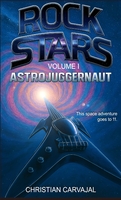
I tell you all this because for the last few months, I’ve been struggling under the weight of a sadness so profound it constituted an emergency. Travel suppressed it, but never for long. Good art enlivened my free time, but I could still hear the beast of my misery out there padding and snarling in the darkness. Work became a necessary slog after an unearned demotion last summer. I wrote three books and readied them for publishing, but long experience suggested those books wouldn’t be destined for the New York Times bestseller list. From a sheer sales standpoint, my ROCK STARS trilogy threatened to be (and thus far, has, in fact, turned out to be) an absolute stiff. Cadaver. Roadkill. I dreaded that would be the case, and yet again it was. So it began to seem to me my artistic efforts weren’t worth much at all, and because I judged myself on the basis of those accomplishments, I suspected I’d head into my third-act decades of declining energy an absolute waste of inherent talent, wit and intellectual curiosity.
For a kid who was expected to be the next Ray Bradbury, adult Carv didn’t grow up to be the next anything. I wrote an article that was published by a mainstream magazine. I did well in a couple of contests. I had plays of varying lengths performed in three states. And yes, I did publish a number of stories and books. But if anyone was waiting for me to validate their belief I’d be an international superstar, those supporters must’ve been wholly disappointed. I’m just not that big a deal.
But then again, neither is Mauna Kea … if we judge it by only what we can see above sea level.
This is the part I think might be universally relevant and important. The math major in me balks at the idea of two different calculating algorithms yielding two very different answers, yet both being entirely right. In the classroom that’s not how math works; but in real life, there’s more than one way to measure a cat. A Maine Coon housecat is a pygmy compared to a Bengal tiger, for example, but if you try holding a Maine Coon on your lap, those 25 pounds of floofy disdain and superiority will still make one hell of an impression.
I have to recalculate my achievements to account for how far I had to climb just to crane my poor head above water.
What I realized in that Victoria swimming pool is I had no reason for most of my life to anticipate ever landing in such a place. Janitor Jehovah’s Witness kids from a trailer park in Crowder, Oklahoma do not visit Victoria, Canada. I graduated with people who, I learned at a high school reunion, never left their home county, not even on vacation, not even for a family reunion or funeral. I didn’t come of age in L.A. or New York City or London or even Vancouver, BC. I didn’t know anyone who could send the elevator down or even give me a leg up. My parents did the very best they could, but they had their hands full just keeping creditors at bay and dinner on the table. I returned to Los Angeles after grad school with a debilitating fear of driving, especially on busy SoCal freeways. The only advantage I had was my brain. And while I’m grateful for all the help it rendered me over the years, I gotta tell ya, it tossed some pretty daunting roadblocks in front of me as well. To say I didn’t fit in smoothly in Crowder or the McAlester, Oklahoma Kingdom Hall is like saying a polliwog might struggle on a parking lot in Needles, California.
So the next time you assess your own life, you might be tempted to measure yourself against the best of the best. I was taught to do exactly that, but even non-prodigies are confronted daily with the world’s great beauties and athletes and artists via streaming TV and social media. If you find your accomplishments dwarfed by theirs, congratulations, your assessment of yourself is correct. Your math is mathing. Mount Kilimanjaro really is small potatoes if you stand it up next to the Himalayas. But if you measure it on its own merits, based solely on how far it rose from where it started, that more flattering comparison will be correct, too. This isn’t classroom math. It isn’t ancient Greek philosopher math. It’s the real world you live in, where some of us start our journeys in an underwater abyss.
My dad’s father abandoned him when he only a baby. My mom’s father stuck around but cursed and beat her remorselessly. Despite the potential of their own brains, they lived much of their lives as minimum-wage laborers. My mom grew up in a world that suppressed female achievement other than marriage and housekeeping. Good thing we don’t do that anymore! (Pause for sad laughter. As a species we throw away so many Mozarts out of sheer, stubborn xenophobia.) Mom thinks her only real accomplishment was raising four pretty cool kids, but there’s something to be said for “simply” getting yourself out of hock — which she has in several ways. The same could and should be said of me.
At 58, I’m a published author and writer literally hundreds of times over. I speak three languages with some degree of fluency and dabble in several others. I earned three degrees including an MFA. I was an actor in a show that made the finals of a national competition for community theater troupes. I braved my phobias to drive L.A. freeways, schmooze with Hollywood celebrities and perform stand-up comedy. I worked for Warner Bros. in Burbank and wrote for Cinefex magazine. I dated brilliant, beautiful women and married the best of them all. I live in a renovated condo and drive a new-ish electric sedan. I’ve visited numerous foreign countries on three continents and will soon jet off to Istanbul, Hong Kong and Shenzhen. I bring home a salary above the national average at a job that makes good use of my talents. Those few brave souls who took a risk on my novels enjoyed some pretty darn fine reads. I’m super happy with ROCK STARS. I don’t know if it’s the Great American Novel or even deserving of awards consideration, but it’s fun and satisfies all the aspirations I had for it that I could control. The rest is up to you and pure, stupid, chaotic fate. Even Vincent never learned he was Van Gogh. But even if his paintings had never been appreciated outside the confines of a French mental hospital, he still would’ve been just as fantastic at what he did. Not every artist is lucky enough to find fame and fortune, but maybe that shouldn’t be the only justification for feeling pride in one’s worth.
Or one’s life. And maybe that’ll mean something to you as well. If it does, please let me know in the comments. I’ve been lucky enough to meet a fair number of Everests in my chosen fields, but I suspect I know more Mauna Keas.


Leave a Reply